Control your fate by getting things done.
One board for the days ahead and the work waiting on them. It runs offline, on your own device, and it is free.
Three paint swatches, up on the wall since July. Still there.
Plan living room move
0/60 of 6 sub-tasks donehome- Get the whole move out of my head
- Change paint colorSat, Sep 12Scheduled Sat, Sep 129:00amReminder at 9:00am
- Repeats: every wednesdayRolled from Wed, Sep 9Water the plantsWed, Sep 9Scheduled for this dayIn OverflowScheduled Wed, Sep 9 · in Overflow since Fri, Sep 11
- Measure the room before ordering the couch
- Location: Donation Center.Drop books at the donation center
- Upgrade TV
You wrote it down. That is most of it.
An unfinished task interrupts work that has nothing to do with it. Faite gives it somewhere to go the moment you think of it.
Unfinished goals caused intrusive thoughts during unrelated tasks — and letting people write a specific plan eliminated the effect. Not doing the task. Planning it.
A date and a time. Not just a date.
Drag a card onto a day and it has a when. Add a time and it has an appointment.
Prompted to write down a date, people did no better than the control group. Prompted to write down a date and a time, vaccination rates rose 4.2 percentage points.
Miss one. There is no streak to break.
Repeating to-dos come back on their own schedule. Faite never counts how many you have kept in a row, because nothing in the evidence says it should.
In a twelve-week study of real daily habits, missing a single opportunity did not materially affect how the habit formed.
You were never going to finish on Tuesday.
So a missed day rolls forward instead of turning red. Your order was right; only the date was optimistic.
Asked for their best guess, students said they would finish in 33.9 days and took 55.5. Fewer than a third finished inside their own most accurate estimate.
The things you keep not doing are the things you keep thinking about.
After a few rolls a card moves to Overflow — not to shame it, but because leaving it undecided is the expensive part.
People acted least on the goals they felt most torn about, and spent the most time thinking about exactly those.
Letting go helps. Sending it back helps twice as much.
Every card gets one of three honest endings: you do it, you send it back to its list, or you let it go.
Across 31 samples, dropping an unreachable goal was linked to better quality of life (r = 0.08) — and redirecting to a new one more than twice as strongly (r = 0.19).
That is the whole idea.
Write it down, give it a day, and let the board carry it until you do it, move it, or let it go.
Also in Raycast
Capture it without opening anything.
Faite has a Raycast extension. Type a to-do and it lands on the board, dated and filed — and if you were reading something, the to-do remembers the page so you can pick it back up.
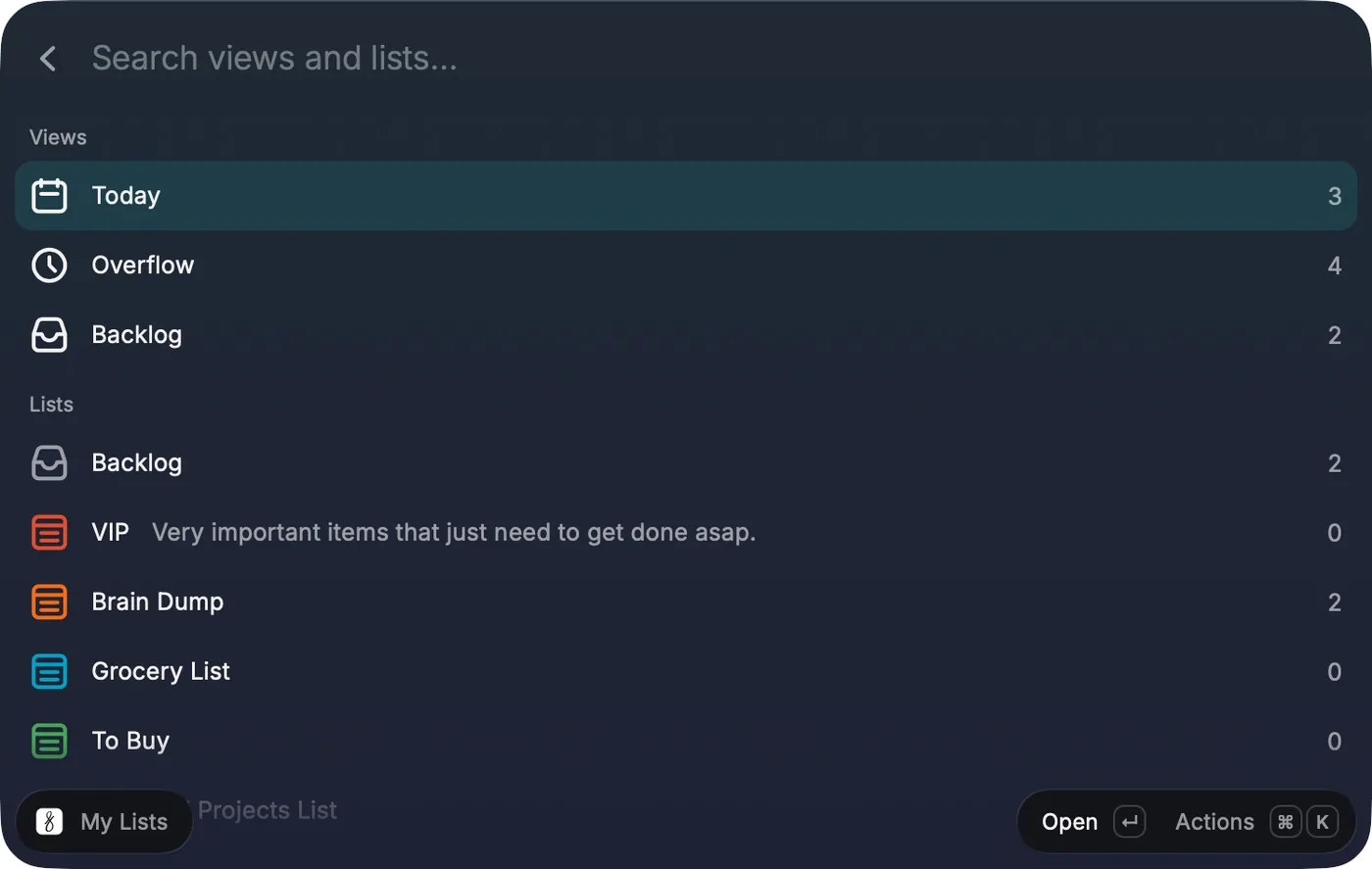
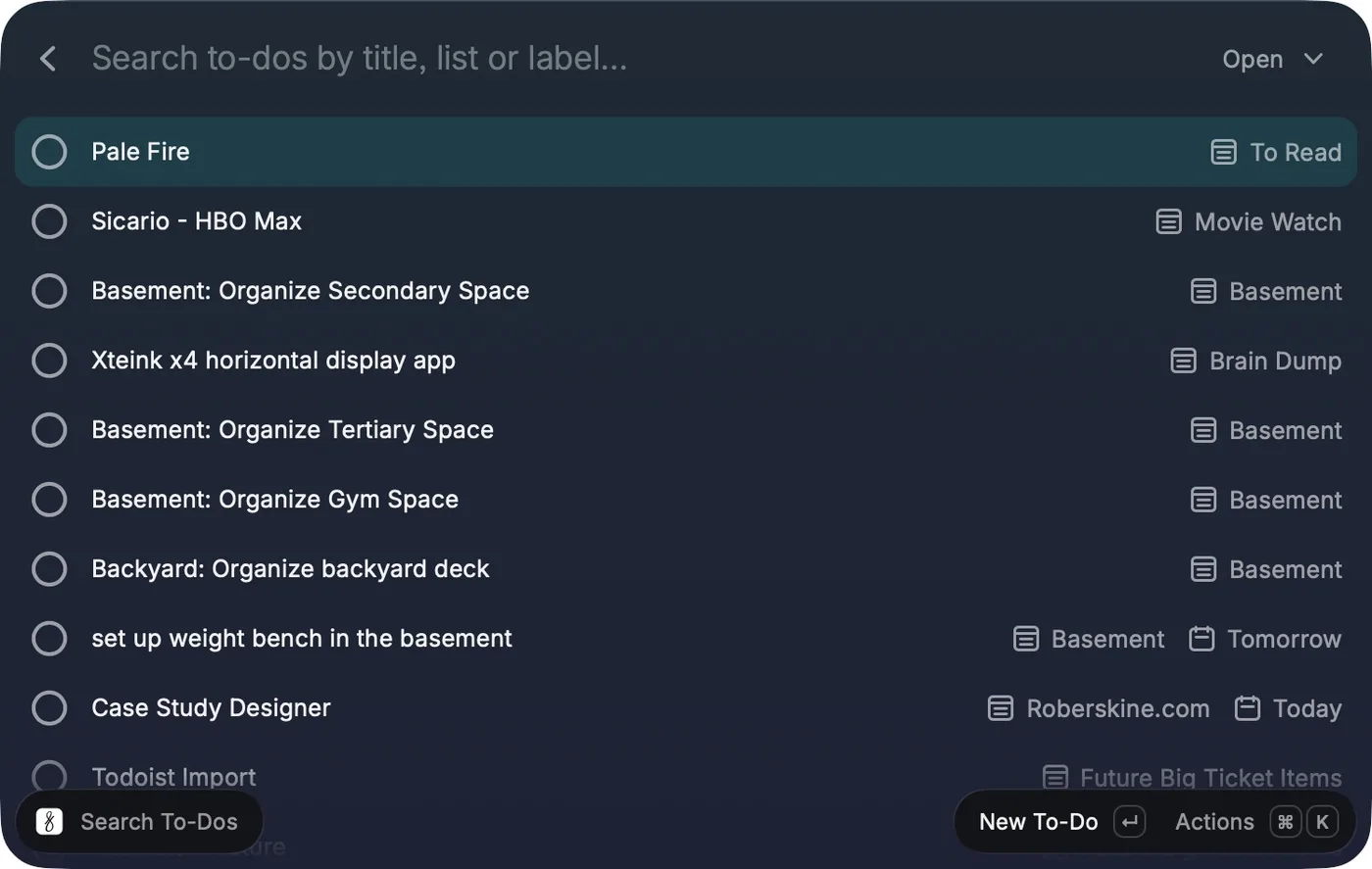
It also answers Raycast AI, so you can turn a page of meeting notes into to-dos and file them where they belong, in one sentence.